
IBAM EP87: Business as Mission in Action: The Story of an Entrepreneur in Indonesia

“They become a productive entrepreneur… a leader in their church and in their community.”
— Steve Adams | IBAM
How One Young Business Owner Used a Simple Marketplace Idea to Build Relationships and Open Doors for Conversations About Faith
In this episode of the IBAM Biblical Entrepreneurship Podcast, Steve Adams shares the story of a young entrepreneur in Indonesia whose small business has become a platform for meaningful conversations about faith.
The story highlights the heart of IBAM’s mission: empowering local believers to build sustainable businesses that also create opportunities to share the Gospel and strengthen their communities.
Indonesia is a vast country made up of thousands of islands and nearly 300 million people. The culture is predominantly Muslim, and many Americans do not know much about it. But within this complex environment, entrepreneurs are building businesses that provide economic stability and spiritual impact.
This episode offers a glimpse into how business can become a natural bridge for relationships, trust, and meaningful conversations.
What IBAM Does Around the World
Before sharing the story of the entrepreneur in Indonesia, Steve Adams explains the core mission of IBAM.
IBAM focuses on empowering indigenous believers—people who live within their own cultures and communities—to become entrepreneurs and leaders.
These entrepreneurs are often part of movements that are already committed to growing churches and discipling believers. However, many of these communities face economic challenges and rely heavily on outside financial support.
IBAM seeks to help them develop economic sustainability from within.
The process involves several key components:
Training in biblical entrepreneurship
Partnership with local movement leaders
Identifying individuals with integrity and strong character
Providing capital to help start or grow businesses
Entrepreneurs who go through the process combine their business training with the discipleship skills they have already learned through their faith communities.
As a result, they become both:
Productive business owners
Leaders in their churches and communities
This approach creates multiple layers of impact.
According to Steve Adams, these entrepreneurs often become:
Problem solvers in their communities
Influential leaders within their churches
Examples of integrity in the marketplace
The result is a model that combines economic development with spiritual transformation.
Why Business Matters in Many Cultures
Steve Adams also describes an insight he first experienced years ago while working in the Middle East.
Business plays a very important role in many Muslim cultures. In some cases, individuals who become followers of Christ may face rejection from their families, government, or communities.
However, entrepreneurship can sometimes change how they are perceived.
One example Adams shares comes from Uzbekistan.
A believer there ran a business building window frames, doors, and windows. Surprisingly, one of his biggest referral sources was the local imam.
When Adams asked why, the businessman explained something fascinating about the business culture.
In many negotiations, deception is common. But many people believe Christians are honest and trustworthy.
Because of that reputation, people often prefer doing business with them—even if they do not share their faith.
This dynamic has appeared repeatedly across many countries
IBAM has worked in, including:
Ukraine
Uzbekistan
Kyrgyzstan
Tajikistan
Other parts of Central Asia
These experiences reinforced an important lesson:
Integrity in business can open doors that might otherwise remain closed.
Meeting an Entrepreneur in Indonesia
During a recent trip to Indonesia, the IBAM team visited students who had gone through their training process.
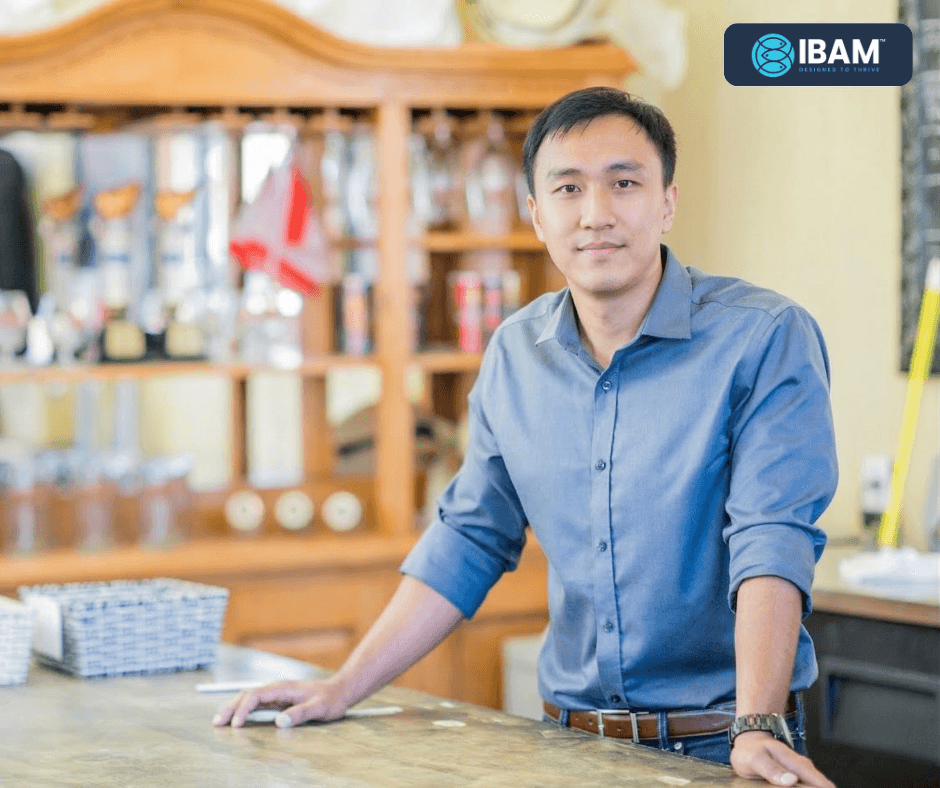
One of them was a young entrepreneur named Suryan.
He had attended a university and graduated a few years earlier. After completing his education, he wanted to start a business that would allow him to connect with students and people in the local community.
His idea was simple.
He opened a small shop across from the university where he cleans helmets and shoes.
At first glance, that might seem like an unusual business idea.
But in Southeast Asia, scooters are one of the primary forms of transportation. While cars are common, scooters are everywhere—moving between vehicles and filling the roads.
Because of this, helmets and shoes quickly become dirty.
That created a real need in the marketplace.
Suryan’s small shop provided a solution.
And it worked.
Within a relatively short time, his business became successful enough that he hired an employee.
A Marketplace Idea Based on Local Knowledge
One important detail about this story is how the business idea came about.
IBAM does not tell entrepreneurs what businesses to start.
They also do not provide business ideas.
Instead, the entrepreneurs themselves develop their own ideas based on their deep understanding of their local markets.
Suryan knew:
The university environment
The large number of scooter riders
The constant need for helmet and shoe cleaning
His intimate knowledge of the marketplace helped him identify a practical opportunity.
This is a key principle of the IBAM model.
Entrepreneurs who understand their culture and environment are often best positioned to identify business opportunities that outsiders might never recognize.
A Simple “Kingdom Plan”
When the IBAM team visited Suryan again about 15 to 18 months after approving his business loan, they asked him an important question.
They asked:
“What is your Kingdom plan?”
In other words, how would he use his business as a platform to reach people?
His answer surprised them with its simplicity.
Suryan explained that he simply tries to build conversations with his customers.
When customers come in repeatedly, he builds relationships with them over time.
Eventually, those customers begin sharing their personal struggles and problems.
Instead of offering advice immediately, Suryan listens.
He allows the relationship to grow and the trust to develop.
Then, when he feels that trust has been established, he asks a simple question.
He asks:
“Would you like to know how God has helped me with my problems?”
According to him, most people say yes.
That moment becomes the doorway to conversations about the Gospel.
A Lesson in Simplicity
When Steve Adams and the others heard this explanation, they were struck by how simple it was.
The approach required no complicated strategy.
It was simply:
Building relationships
Listening to people’s struggles
Asking one thoughtful question
Adams described how the moment challenged him personally.
The simplicity of the approach made him reflect on his own life and consider why he could not operate with the same straightforward mindset.
It became a reminder that sharing faith does not always require complex methods.
Sometimes it begins with a simple question asked in the context of a genuine relationship.
Seeing the Impact Firsthand
During the visit, Adams and the IBAM team gathered with about 28 people.
These included:
Former IBAM students
Their spouses
Leaders of the local movement
Seeing these entrepreneurs and their families together was deeply encouraging.
For Adams, moments like these are one of the reasons he shares these stories through the podcast.
He explained that he wishes listeners could see firsthand what he sees when visiting these communities.
Because when you witness the transformation directly, it becomes very real.
Other Entrepreneur Stories from Around the World
During the same episode, Adams also shared examples of entrepreneurs they recently visited in Africa.
In one country, the team met with nine students who had gone through the program.
Seven of them were approved for funding to launch their businesses.
They also visited several entrepreneurs whose businesses were already operating.
One of them runs a business that buys the most popular car model in Zambia.
His business model is simple:
1. Buy the car
2. Part it out
3. Sell the parts to repair shops
The business has been very successful and has also created opportunities to reach people with the message of Christ.
Another entrepreneur runs a chicken farm outside the city.
The farm provides employment for a family that works there.
IBAM also worked with a student who operates a transportation business.
He drives visitors to and from the airport and provides transportation around the city.
These examples show the wide variety of businesses entrepreneurs launch through the program.
Why These Stories Matter
Stories like these highlight an important reality.
Business can be more than just a way to earn income.
It can also become a platform for:
Relationships
Influence
Leadership
Faith conversations
Entrepreneurs trained through IBAM are not only building businesses.
They are also becoming leaders who serve their communities.
Their businesses allow them to interact with people every day in natural ways that open the door for deeper conversations.
How IBAM Is Expanding
According to Adams, IBAM’s impact is growing quickly.
The organization’s budget has increased by approximately 50% each year over the past three years as the work expands into new regions.
Currently, IBAM works in several regions including:
Central Asia
Africa
Asia Pacific
There are also opportunities emerging in places like:
India
South America
However, the expansion is limited by available resources.
That is one reason Adams shares these stories through the podcast.
His goal is to invite listeners to participate in the mission.
A Call for Small Givers
One vision Adams shares is building a large community of supporters who give small amounts regularly.
He describes the possibility of tens of thousands of people contributing small gifts such as:
$50 per year
$100 per year
When many people participate together, those small contributions can empower IBAM to support thousands of entrepreneurs worldwide.
Introducing Third Fish Academy
Toward the end of the episode, Adams announces the launch of a new resource called Third Fish Academy.
The platform is designed to make IBAM’s training available online.
Key features include:
Free access
No in-app purchases
A learning management system
22 short learning sections
Five modules
A business plan builder
The curriculum has been adapted from the training IBAM uses internationally and redesigned for a Western audience.
The goal is to help people learn how to integrate their faith with business and potentially start their own businesses as well.
A Movement Built on Faith and Entrepreneurship
The story of Suryan illustrates the heart of the IBAM mission.
A small shop cleaning helmets and shoes might seem ordinary at first glance.
But within that simple business lies an opportunity to build relationships, listen to people’s struggles, and share the message of hope found in faith.
Through training, mentorship, and support, entrepreneurs like Suryan are becoming leaders who bring both economic and spiritual impact to their communities.
And sometimes, the most powerful moments begin with a simple question.
👉 Watch the full episode here: https://youtu.be/809jbz2ok2c
👉 Join the free Third Fish Academy at ThirdFish.org
Transcript Evidence
All content in this article was derived exclusively from the provided episode transcript describing:
Indonesia’s cultural context and population
IBAM’s model for empowering indigenous entrepreneurs
The story of Suryan’s helmet and shoe cleaning business
His approach to sharing faith through customer relationships
Examples of other entrepreneurs in Africa
The launch of Third Fish Academy
Become an Impact Partner...


Share and Comment...

Real-World Stories of Business as Missions
Tune in to the International Business as Mission podcast, where faith and entrepreneurship intersect. Each week, gain insights from industry leaders and experts on building companies that glorify God while making a difference globally.


Download Your FREE Resources Below


Contact Us
Email: hello@ibam.org
Telephone: +1 (703) 652-iBAM (4226)
Join the IBAM™ Movement
Participate in projects that balance profit with purpose!
Mailing Address
PO Box 4323
Wheaton, Il 60189, USA
See What IBAM Is Up To On Social!


© 2026 IBAM™ All Rights Reserved.