IBAM EP 108: Biblical Wealth and Kingdom Impact: How Faithful Entrepreneurs Turn Income Into Influence

“Faithfulness is multiplication.”
— David and Jason Benham
A biblical conversation about wealth, multiplication, workplace ministry, and using business to provide for families, advance God’s purposes, and create lasting Kingdom impact
For many Christians, wealth can feel like an uncomfortable subject.
Some believers avoid the conversation completely. Others pursue money so intensely that wealth becomes the goal rather than a resource. According to David and Jason Benham, both approaches miss the biblical purpose of wealth.
In this episode, the Benham brothers explain that money itself is not the problem. The real questions are:
Why do you want to gain wealth?
What will you do with it?
How faithfully will you steward what has been entrusted to you?
Will your income become an idol, or will it become a resource for impact?
Their central message is simple: generating income is important, but income is not the final destination.
The goal is income to impact.
Is It Biblical for Christians to Create Wealth?
David and Jason begin with a question many Christians have wrestled with: Is it biblical to create wealth?
They acknowledge that there is bad theology on both sides of the discussion.
On one side is what they call the poverty gospel—the belief that wealth itself is somehow wrong or incompatible with faithfulness. On the other side is the prosperity gospel, where financial gain can become the primary measure of faith or spiritual success.
The Benham brothers reject both extremes.
They define wealth as a financial resource that gives a person options. Those options may include:
Providing for a family
Blessing future generations
Supporting ministry
Investing in businesses
Influencing communities
Advancing God’s Kingdom agenda
Resources are not the ultimate source. God is the source.
Wealth is simply one of the resources that can be cultivated and directed toward a greater purpose.
The issue is not whether money exists in your hands. The issue is what exists in your heart.
The Biblical Call to Cultivate Resources
To understand the biblical purpose of wealth, the brothers return to the beginning of Scripture.
They point to Genesis and the creation account. Before plants had grown from the earth, resources were already present in the ground. What was missing was someone to cultivate them.
They explain cultivation as acquiring and developing what has been provided.
Adam was placed in the garden to cultivate and keep it. This calling came before sin entered the world. According to the brothers, humanity’s responsibility to cultivate resources did not disappear after the fall.
What changed was human motivation.
Sin could corrupt the reason people wanted wealth and the intention behind how they used it. But the original calling to develop, steward, and multiply resources remained.
The first resource specifically named in their discussion is gold. They contrast two biblical uses of gold:
Aaron used gold to create an idol that pulled people away from God.
King David used gold to help fund a temple that drew people toward God.
The material was not the central problem.
The difference was the purpose.
Money, gold, business ownership, and financial influence can all be used in different ways. The deciding factors are the motivation for acquiring them and the intention behind using them.
The Three Biblical Aspects of Wealth
David and Jason organize their teaching around three aspects of wealth:
The reason for wealth
The requirement for wealth
The reward of wealth
Together, these ideas form their biblical framework for moving from income to impact.
The Reason for Wealth: Provide and Promote
The reason for wealth can be summarized in two words:
Provide and promote.
The first purpose is to provide for your family and future generations.
The second is to promote God’s Kingdom agenda on the earth.
This means wealth should not end with personal comfort. It can meet household needs, create options for future generations, and support work that advances truth and brings people toward God.
The brothers offer a direct warning: when impact is not on your radar, income can easily become your idol.
Income becomes dangerous when it stops being a tool and becomes the ultimate object of devotion.
A healthier perspective asks:
How can this income provide for the people entrusted to me?
How can these resources promote what God is doing?
How can business success become Kingdom impact?
When believers focus on impact, the brothers argue, they are less likely to fall in love with income.
The Requirement for Wealth: Faithfulness
The requirement for wealth is faithfulness.
Growing up, the brothers’ father taught them that God was not calling them to be successful. He was calling them to be faithful.
But how should faithfulness be defined?
David points to Jesus’ parables involving money and stewardship. In the story, servants receive resources from a master and are instructed to do business until he returns.
When the master comes back, he asks what they gained from what they were given.
Some servants multiplied the resources. One produced ten times what he received. Another produced five times what he received. The master described them as faithful.
Another servant acted out of fear. He hid what he had been given and returned it without growth.
He maintained rather than multiplied.
From this, the brothers draw a strong conclusion:
Faithfulness is multiplication.
They apply this principle spiritually and financially.
Spiritually, believers are called to multiply disciples.
Financially, believers have the opportunity to multiply resources for their children, their children’s children, and the work of God’s Kingdom.
Faithfulness is not careless risk-taking. It is also not fearful preservation. It is the active stewardship of what God has placed in your hands.
The Reward of Wealth: Income, Inheritance, and Influence
When the reason for wealth is clear and the requirement of faithfulness is practiced, the brothers identify three rewards:
Income
Inheritance
Influence
Income
Income allows believers to live without being unnecessarily dependent on others.
The brothers describe financial independence as the ability to avoid being beholden to everyone, becoming a burden to others, and instead becoming a blessing.
Income gives options. It supports a household and creates the capacity to serve.
But income is only one part of the reward.
Inheritance
The second reward is inheritance.
The brothers explain that inheritance is first spiritual.
Their parents did not leave them a large amount of money. Instead, they left them a desire for the Word of God, connection to a local church, and a commitment to walking in the power of the Holy Spirit.
They consider that spiritual inheritance more valuable than silver or gold.
At the same time, they maintain that believers have an opportunity to create a financial inheritance for future generations.
A faithful life can leave both:
Spiritual conviction
Financial resources
Biblical wisdom
A model of stewardship
A foundation future generations can build upon
Influence
The third reward is influence.
In the parable discussed in the episode, faithful servants received authority over cities. The Benham brothers connect financial authority with the ability to influence communities.
Ownership creates influence.
That may include ownership of:
Businesses
Real estate
Investments
Market assets
Other income-producing resources
They argue that the church has often taught generosity well but has not always taught believers how to generate the wealth they hope to give.
If believers want to exercise influence, they must learn both generosity and generation.
What Kingdom Impact Really Means
After defining wealth, the brothers define Kingdom impact.
They explain Kingdom as the comprehensive rule of God in every area of life.
Nothing is excluded.
God’s rule applies to:
Marriage
Family
Money
Business
Culture
Work
Personal conduct
Impact, in their definition, is the collision of two opposing forces.
When God’s rule is lived out in every part of life, it eventually collides with beliefs, systems, and ideas that oppose it.
Kingdom impact is therefore not simply a collision. It is the Kingdom of heaven colliding with and overcoming the kingdom of darkness.
This definition carries an important challenge.
Believers should not automatically retreat when faith creates tension. According to the brothers, avoiding the collision can mean forfeiting the impact.
They warn against withdrawing from conversations that desperately need truth. When Christians remove every difficult or challenging element from their message, the church can stop preparing believers for spiritual resistance.
The brothers describe this vividly: the church can shift from a boot camp into a bounce house.
Their point is not that believers should seek unnecessary conflict. It is that they should not shrink back simply because obedience creates opposition.
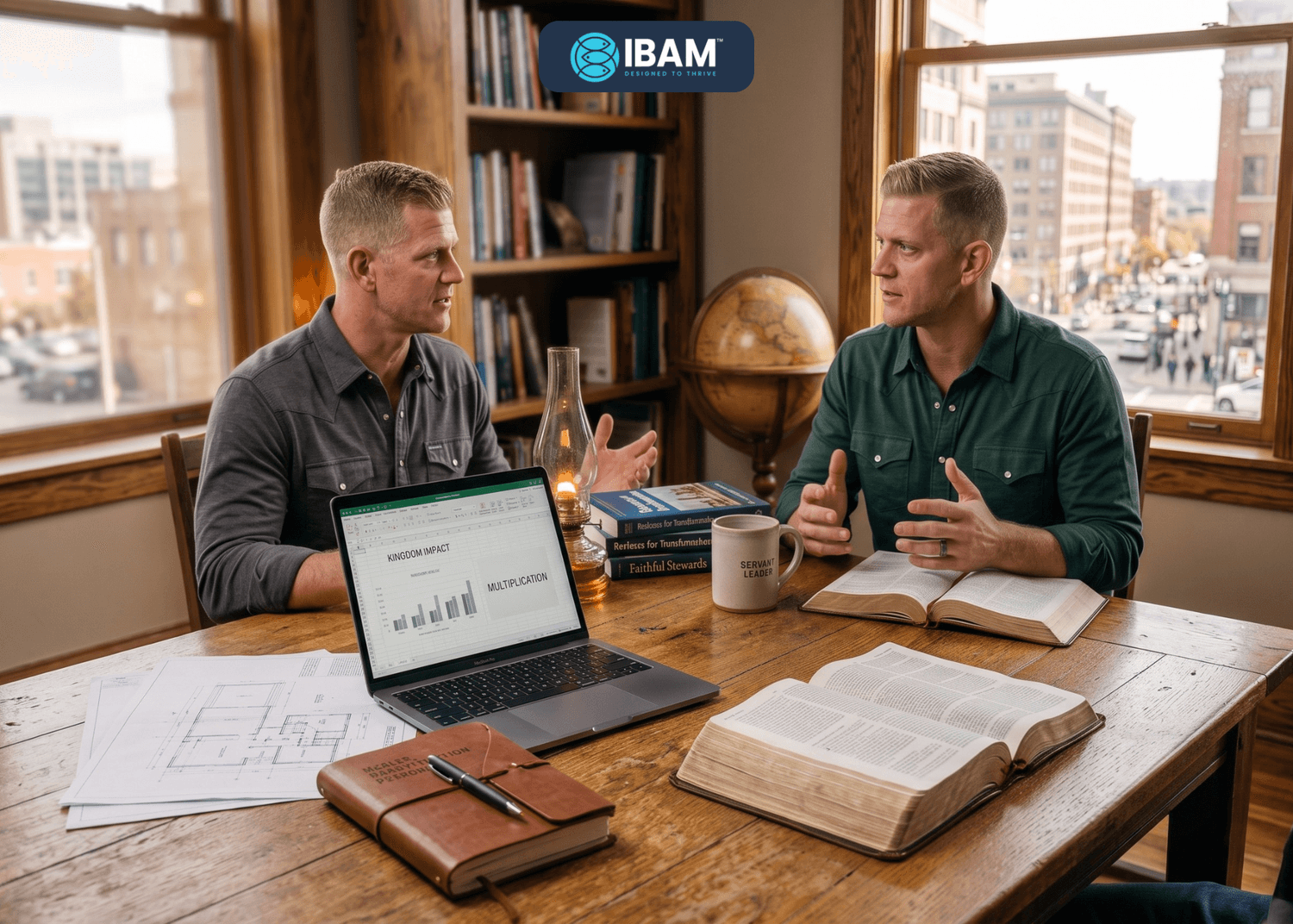
Your Business Can Be Full-Time Ministry
The Benham brothers share that after leaving professional baseball, they felt a strong desire to enter full-time ministry.
At the same time, they wanted to start businesses and earn money.
This created an internal tug of war. They viewed ministry and business as two different directions.
In 2003, they started a business without formal business training. They made a commitment to read the Bible from beginning to end every year and apply what they learned about building, scaling, and investing.
Over seven years, they grew one office in Charlotte, North Carolina, into 100 locations across 35 states. They later entered other businesses, including a business process outsourcing company in the Philippines, and made investments.
Yet even during that growth, they often felt guilty for not being in what they considered full-time ministry.
That changed when they sensed God asking them: Who told you that you were not already in full-time ministry?
From that question came three identity statements for workplace believers:
You are a minister right where you are.
You are on mission.
Your work is worship.
A minister is not defined only by where a person works or how that person is paid.
It is about passion, God’s presence, and obedience in the position where a believer has been placed.
The workplace does not have to compete with ministry. For a believer, work can become the location where ministry happens.
Your Work Is Worship
The brothers explain that the Hebrew word they reference for both work and worship is avodah.
In their teaching, separating work from worship created a sacred-secular divide that was never intended to exist.
Worship became what people did at church on Sunday.
Work became what people did on Monday to earn a living.
But the brothers argue that the two were never meant to be separated.
When believers understand that they are ministers, that they are on mission, and that their work is worship, they begin to see their businesses differently.
A company is no longer only a source of income.
It becomes a place to:
Serve people
Practice biblical principles
Multiply resources
Provide for families
Build influence
Promote God’s Kingdom agenda
Riches Versus Wealth: The Bucket and the River
The brothers use a simple picture to explain the difference between riches and wealth.
Imagine that money is water.
Riches are like a bucket of water.
Wealth is like a river.
When a cup of water is removed from a bucket, the water level drops. The bucket represents income produced by trading time for money. You work, receive payment, place the money in the bank, and spend it. As you spend, the amount decreases.
A river keeps flowing.
The river represents passive investment income—money produced through investments rather than only through personal labor. When dividends or investment income are spent, the source can continue producing.
Everyone may begin with a bucket.
The goal, however, is to move from depending only on active income toward building investment income that continues to replenish.
For the brothers, this meant doing both:
Building businesses
Making investments
They invested in companies, real estate, markets, and other opportunities mentioned in the episode. Their aim was not simply accumulation. It was multiplication.
When a Platform Becomes an Idol
As their businesses grew, the brothers’ influence also grew. Eventually, they received an opportunity to film a television show with HGTV.
The opportunity appeared to offer an even larger platform for impact.
But their beliefs attracted opposition.
When network attorneys became concerned about online criticism, the brothers became afraid they would lose the show. They drafted an email saying they would remain quiet about certain beliefs while publicly representing the network.
They did not send it immediately.
Instead, they sent the draft to a pastor friend. He strongly challenged them and asked whether God might be raising them up not merely to have a television show, but to confront a stronghold that kept Christians silent.
The brothers realized they had become more focused on preserving the platform than remaining faithful to the One who gave it.
The platform had become an idol.
They repented and chose not to send the email.
From that experience, they learned that boldness without brokenness can create a bully. Courage begins by recognizing fear and allowing the Holy Spirit to produce strength.
The show was eventually canceled after outside pressure targeted the network and its advertisers.
The loss was painful, but it clarified their calling.
Their platform could be removed. Their finances could be attacked. Their reputation could be distorted.
But the truth could not be stopped.
Do Not Shrink Back From Kingdom Impact
The episode closes with a call for believers to know God, display strength, and take action.
This is not a time to shrink back in fear.
It is a time to move forward by faith.
For Christian entrepreneurs, that means refusing to make income the ultimate goal. Build, work, invest, provide, and multiply—but direct those resources toward Kingdom impact.
Your business can be ministry.
Your work can be worship.
Your income can become impact.
And when that impact creates resistance, do not automatically avoid the collision. Stand with courage, remain broken before God, and faithfully steward what has been entrusted to you.
Watch full episode on YT - https://youtu.be/o-aNZtvT2WM
Join the free Third Fish Academy at ThirdFish.org
Transcript Evidence
This article was developed exclusively from the EP 108 transcript. The following ideas and examples appear directly in the episode:
David and Jason Benham define wealth as a financial resource that gives people options.
They contrast what they describe as poverty-gospel and prosperity-gospel approaches to wealth.
They teach that the reason for wealth is to provide for family and future generations and promote God’s Kingdom agenda.
They state that faithfulness is multiplication, drawing from the parables of the talents.
They identify income, inheritance, and influence as three rewards of wealth.
They define Kingdom as God’s comprehensive rule in every area of life.
They define impact as the collision of two opposing forces.
They share their business journey from one office to 100 locations across 35 states.
They describe workplace believers as ministers who are on mission and whose work is worship.
They use the bucket-and-river illustration to distinguish riches from wealth.
They recount their HGTV experience, the draft email they chose not to send, the rebuke from their pastor friend, and the eventual cancellation of the show.
They close by calling believers not to shrink back in fear but to move forward by faith.
Become an Impact Partner...


Share and Comment...

Real-World Stories of Business as Missions
Tune in to the International Business as Mission podcast, where faith and entrepreneurship intersect. Each week, gain insights from industry leaders and experts on building companies that glorify God while making a difference globally.


Download Your FREE Resources Below


Contact Us
Email: hello@ibam.org
Telephone: +1 (703) 652-iBAM (4226)
Join the IBAM™ Movement
Participate in projects that balance profit with purpose!
Mailing Address
PO Box 4323
Wheaton, Il 60189, USA
See What IBAM Is Up To On Social!


© 2026 IBAM™ All Rights Reserved.