
IBAM EP 96: Biblical Business Principles That Never Change

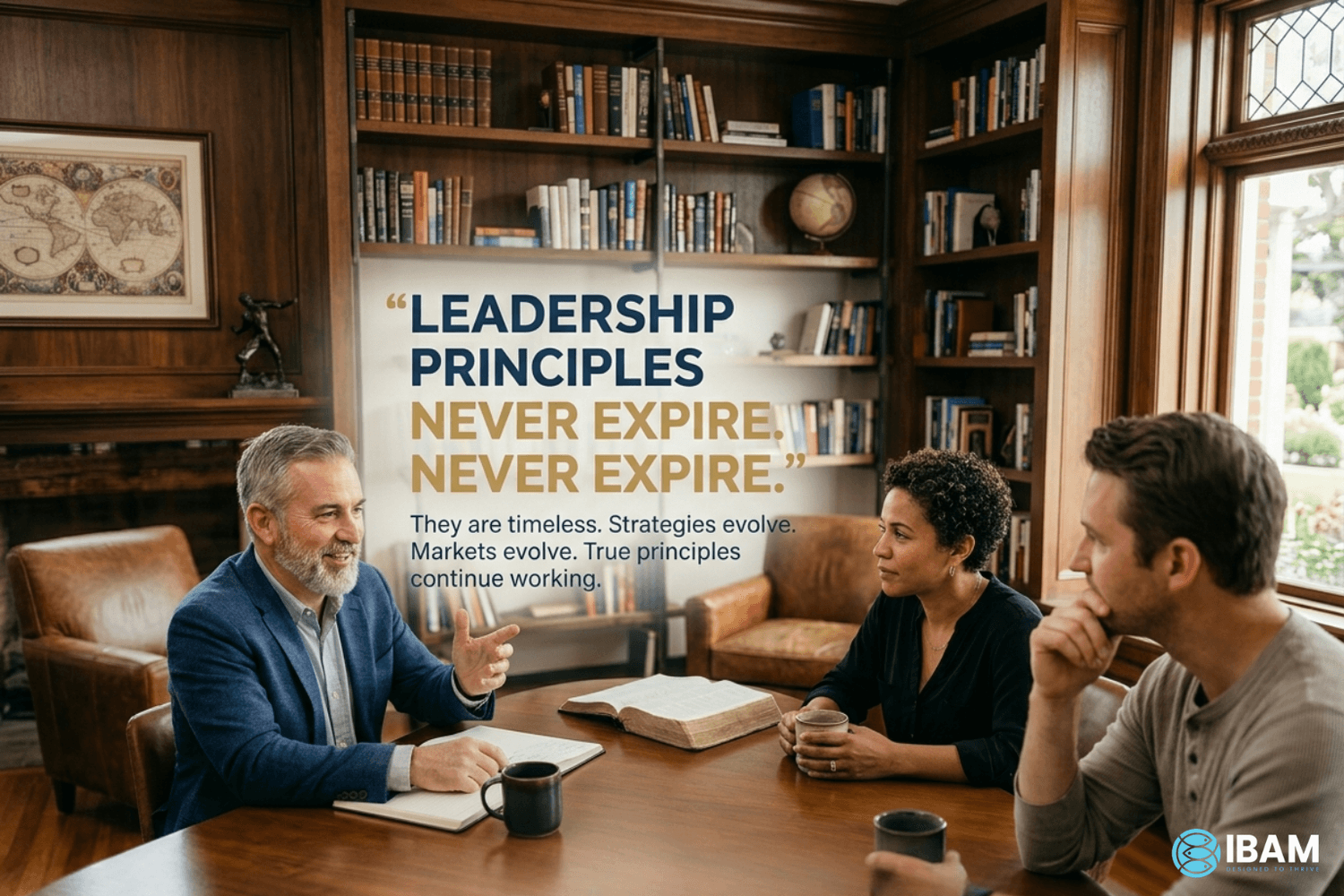
“Strategies evolve. But principles never change.”
— Cary Summers | Former CEO of the Museum of the Bible
How Timeless Leadership Principles from Nehemiah Continue to Shape Business, Leadership, and Impact
In a world obsessed with trends, tactics, and the “next big thing,” one truth continues to stand out:
Principles never change.
That idea became one of the central themes in this conversation as the discussion explored leadership, business growth, faith, and the long-term power of timeless principles rooted in Scripture.
From helping expand Abercrombie & Fitch and Bass Pro Shops to studying the Book of Nehemiah for decades, this episode highlighted how enduring principles continue to shape organizations, leaders, and even families.
The conversation also challenged the long-standing divide between “sacred” and “secular” work and explored how biblical principles can operate powerfully inside the marketplace.
For entrepreneurs, leaders, and anyone passionate about Business as Mission, this episode offered a practical and deeply encouraging reminder:
Timeless principles still work.
From Abercrombie & Fitch to Bass Pro Shops
The episode began with stories from the early years in retail leadership and organizational growth. The discussion traced the journey from working with Oshman Sporting Goods to helping lead Abercrombie & Fitch after it was purchased out of bankruptcy in 1978.
At the time, Abercrombie & Fitch was described as:
One of the oldest sporting goods companies in the world
A company that outfitted U.S. presidents dating back to the late 1800s
A premium sporting lifestyle brand with a strong catalog business
The conversation then shifted to the relationship with Bass Pro Shops founder John Morris and the transition into helping expand Bass Pro Shops in Springfield, Missouri.
One major insight from that season was how retail, catalogs, and customer specialization evolved together.
At the time:
There was no Internet
Catalogs functioned as a primary growth channel
Specialized customer targeting became a major strategy
The discussion highlighted how thematic catalogs were created for specific customer groups rather than relying on one massive catalog. That shift allowed the business to scale more efficiently and strategically.
The Challenge of Scaling Organizations
One of the strongest practical business discussions in the episode centered on the challenge of scaling organizations while maintaining culture.
The conversation emphasized:
Going from one location to two is difficult
Expanding geographically creates complexity
Leadership systems become essential as organizations grow
Maintaining culture during expansion requires intentionality
An important observation from the discussion:
“Store one… everything is bigger than life. Store two… oh, I got it. Oh no, I don’t have it.”
That insight reflected the reality many entrepreneurs face:
Early growth often creates overconfidence before leaders fully understand what scaling truly requires.
The conversation also highlighted the importance of experience and repetition:
Store three is where leaders may begin understanding the system
Scaling requires structure
Expansion demands leadership maturity
These reflections connected directly to broader leadership principles later discussed through the Book of Nehemiah.
The Search for Principles That Never Change
A major turning point in the conversation came through the discussion about leadership development and management training.
For years, leadership teams attended seminars, conferences, and management training programs. Many introduced “new principles” every year.
That led to a deeper question:
What actually qualifies as a principle?
The response was direct:
A principle is something that never changes.
The conversation compared principles to gravity:
Timeless
Reliable
Consistent
Unchanging
That search eventually led to the Book of Nehemiah.
According to the discussion, the Book of Nehemiah became a magnet because it revealed enduring leadership and management principles that remained applicable across generations and industries.
Over time, the study developed into:
Leadership teachings
Training systems
Written material
A framework of 62 principles drawn from Nehemiah
The conversation repeatedly returned to the idea that timeless principles continue producing results because they are rooted in truths that do not change.
The Sacred vs Secular Divide
Another major theme was the challenge many Christians face when trying to integrate faith and business.
The discussion referenced the idea that many leaders had to “unlearn” the sacred versus secular divide that was commonly taught in earlier generations.
Rather than separating ministry from business, the conversation emphasized that:
Business can operate according to godly principles
Biblical truths can shape leadership and organizations
Kingdom impact can happen inside the marketplace
One of the most important observations in the episode was this:
Many successful organizations unknowingly apply biblical principles even when they are not explicitly using Christian language.
The discussion explained that some businesses:
Were not Christian organizations
Did not use “Christianese”
Still operated according to timeless principles rooted in Scripture
That distinction mattered because the principles themselves remained effective regardless of whether people recognized their biblical origin.
Teaching Nehemiah Principles Internationally
One fascinating story in the episode involved teaching leadership principles in Russia.
The challenge presented was unique:
Could the principles from Nehemiah be taught without explicitly saying they came from the Bible?
The answer was yes.
According to the conversation:
Leadership principles were presented in practical business language
Participants eventually recognized the biblical roots themselves
The timeless nature of the principles made them stand out
One story involved a Russian oil executive connected to a government-owned company. He explained that he could not openly implement biblical material inside the organization.
However, he did something else.
He implemented the principles inside his home with his six children.
According to the story, the principles transformed the family dynamic.
That moment reinforced another major takeaway from the episode:
These principles are not limited to business.
They apply to:
Leadership
Family
Culture
Relationships
Organizational growth
Why Information Alone Is Not Enough
The conversation repeatedly emphasized that knowledge alone does not create transformation.
One of the strongest themes in the episode was implementation.
The discussion explained:
Principles can be summarized quickly
Information is easy to distribute
Transformation only happens when principles are applied consistently
The conversation described how a simple one-page summary of 62 principles continued impacting leaders decades later.
One story shared how a group that attended the Russia training continued meeting every other year for two decades to revisit those principles together.
That long-term use demonstrated something powerful:
Timeless principles continue producing value because they remain relevant across changing seasons and environments.
Empowerment and Leadership Development
The episode also explored empowerment and leadership scaling through a discussion about organizational development.
A leadership framework mentioned in the conversation focused on:
Purpose
Path to mastery
Empowerment
The discussion connected these ideas to discipleship principles:
Giving people meaningful purpose
Equipping and training them
Empowering them with responsibility
An example shared involved young team members being trusted with significant responsibility inside a growing organization.
The result:
Leadership scaled faster
Teams became stronger
Organizational growth accelerated
The conversation highlighted how empowerment creates ownership and allows leaders to multiply influence rather than control everything personally.
Why Timeless Principles Still Matter
One of the clearest lessons from this entire conversation was simple:
Principles never change.
Strategies evolve. Industries shift. Technology advances.
But timeless principles continue shaping:
Leadership
Business
Families
Organizations
Long-term impact
This episode offered an encouraging reminder that leadership rooted in enduring truths can continue producing fruit across generations.
For entrepreneurs, faith-driven leaders, and anyone interested in Business as Mission, the conversation challenged listeners to think beyond trends and return to principles that stand the test of time.
Watch full episode on YT - https://youtu.be/0-ngx6ntRg4
Listen to full episode on itunes/spotify - https://open.spotify.com/episode/6kI3PfDfBKY580Fo8RcRPH?si=Si-7LV95RES45ACteQ5Ljg
Join the free Third Fish Academy at ThirdFish.org
Transcript Evidence
This blog post was created using ONLY the attached transcript. No outside examples, statistics, frameworks, or interpretations were added beyond what was explicitly discussed in the conversation.
Become an Impact Partner...


Share and Comment...

Real-World Stories of Business as Missions
Tune in to the International Business as Mission podcast, where faith and entrepreneurship intersect. Each week, gain insights from industry leaders and experts on building companies that glorify God while making a difference globally.


Download Your FREE Resources Below


Contact Us
Email: hello@ibam.org
Telephone: +1 (703) 652-iBAM (4226)
Join the IBAM™ Movement
Participate in projects that balance profit with purpose!
Mailing Address
PO Box 4323
Wheaton, Il 60189, USA
See What IBAM Is Up To On Social!


© 2026 IBAM™ All Rights Reserved.